How Often Should a Company Value Its Brand?
Brand is one of a company’s most precious intangible assets, but many companies only consider measuring brand when a transaction, dispute or reporting mandate requires them to. A structured brand value assessment is a simple but powerful answer to one question: What is the appropriate frequency for the brand’s valuation? The standard response for most companies is “whenever a material event or reporting requirement causes the number to be relevant” on top of a lighter baseline schedule the company follows on its own initiative. This guide takes the reader through the brand valuation process step-by-step; outlines when a brand valuation can be valuable in real decision making; and provides a brand valuation step-by-step guide for those new to the brand or preparing to work through a brand valuation for the first time. As we go, we will consider real world triggers, common pitfalls, the processes that finance and legal teams tend to run in parallel with, and the cadence that finance and marketing teams tend to fall into after performing this exercise a few times and learning what does and doesn’t work.
What Does Valuing a Brand Actually Involve?
Valuation of a brand requires the conversion of a company’s reputation, customer loyalty and market position into a defensible financial value. The central tenet of a brand value assessment is to convert the intangible perception of a brand — trusting, recalling, pricing power, willingness to pay more for the familiar name — into a money metric that can be understood by financial and investment analysts, auditors, and financial teams. If performed correctly, a brand asset valuation becomes more of a marketing process that’s performed in a spreadsheet format, than anything else; it’s based on third party market research, audited financial data and competitor benchmarking and can withstand the scrutiny of a counterparty or auditors who are on the other side of a negotiation. The mental model that comes in handy for a junior analyst only seeing this work for the first time is that a brand valuation is where finance, marketing and legal all overlap and that is why it’s so likely to involve people from all three functions, not just one. Customer research and brand tracking information usually comes from marketing, the legal provides the information about what is covered and protected, and finance converts the combined information into a number that meets the needs of accounting or transactions.
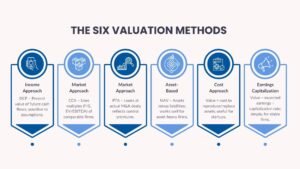
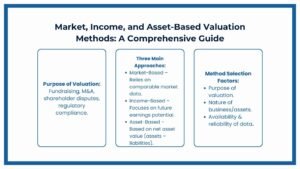
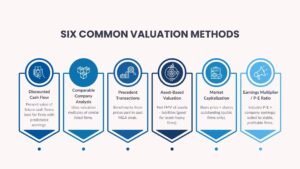
The valuation of a brand is generally done in one of three ways: the income approach, which is based on either the relief-from-royalty or premium-profit method; the market approach, which compares the brand with observable brand transactions in the same industry; or the cost approach, which estimates the cost associated with rebuilding the brand’s recognition and reputation from scratch through advertising and promotion. The majority of practitioners rely on the relief from royalty approach which relies on two assumptions: that a company’s own brand name would in theory be the subject of a royalty payment to the owner, and that the saved royalty stream can be capitalized over the useful life of the brand. The answer really depends on the purpose of the valuation, the industry, and the amount of comparable market data available, and the mechanics are important to consider before dealing with frequency, as the method chosen is often a factor that will affect how easily a valuation can be repeated, updated or later defended before an auditor.
How Often Should a Company Value Its Brand in Practice?
Most private businesses don’t have a legal mandate on how often they should be valuing their brand, yet this is exactly why so many professionals wonder how often should a company value its brand? In reality, the brand valuation process begins when there is a need for a new valuation, not on a set schedule: mergers and acquisitions, licensing negotiations, litigation, restructuring internally, a significant re-branding initiative, or even a change in majority ownership may all call for a new valuation of the brand. When it comes to other times of the year, a lighter-touch brand value assessment is common among companies who are interested in tracking the brand over time as they would track market share, customer retention levels or employee engagement scores. The frequency that a company ends up choosing will convey the importance of the brand in the business model, for example, a consumer brand with little direct value will be valued much more frequently than an industrial supplier where the customer values price and reliability more.
For public companies, the rhythm is different due to accounting standards including IFRS 3 and ASC 350 which stipulate that brand and other intangible assets be evaluated for impairment whenever there is any indication the value may have fallen, and at least once a year for intangibles with indefinite useful lives. This is where a brand valuation guide is truly useful in-house: it provides the finance teams with a defined policy as to when to refresh, and not having to deal with each trigger on its own, and scramble to pull in data at the last minute. Even in private companies that do not have that regulatory pressure, it is good to establish a policy as it makes it much easier to create a respectable number from the erroneous assumptions made years ago than to do so during due diligence, when it might come up during a fundraising round, or a shareholders dispute. In reality, many finance teams stick to a compromise: a full and external review of the valuation whenever there is a large trigger, and a lighter internal review on a regular basis to ensure the value does not get too far out of line between triggers.
What Do Real-World Examples Reveal About Valuing a Brand?
Think of a large, international snack manufacturer buying a smaller snack brand that is popular locally. The allocation of purchase price rules called for a valuation of brand assets shortly after closing, which split the purchase price between the brand name and other intangibles such as recipes, customer lists, distribution contracts, etc. The acquirer’s initial version of royalty rate assumptions were challenged by auditors, who said it was too small a sample and which extended the process by several weeks, and was an early hard lesson for the deal team about beginning to gather data earlier in future. Instead, that valuation was used as a benchmark for annual impairment testing, which means that the brand value assessment was not complete when closing the transaction; it was an annual obligation directly linked to the acquisition process, and the finance team would regularly review the assumptions to see whether the brand had decreased in value since the day of the acquisition. In a quieter, but equally instructive, example, the mid-market industrial equipment manufacturer reviewed its valuation every 3-4 years but saw to it that the royalty that it charged its distributors in several countries was in line with market conditions before it entered into a licence agreement.
Another pattern emerges at tech startups that are in the growth stage and are getting ready for a new round of funding. To answer the increasingly common investor demand for proof that brand equity was building alongside revenue and cost of customer acquisition, one mid-size software company started conducting a brand valuation process annually, even though there was no regulation that demanded it. The finance team at the company eventually developed it into their own house methodology for valuing the company, and they were able to standardise the assumptions and the source of data, so that the exercise was done in days each year instead of weeks. Their biggest challenge early on was that their internal data was not consistent — that is, marketing was monitoring brand awareness surveys and finance was monitoring revenue by product, and there was no way to reconcile those two data sets during the valuation process. The lesson in both instances is the same: frequency is determined by purpose, and purpose is typically determined by the person asking for numbers and their motivation.
What Are the Benefits and Challenges of Valuing a Brand Regularly?
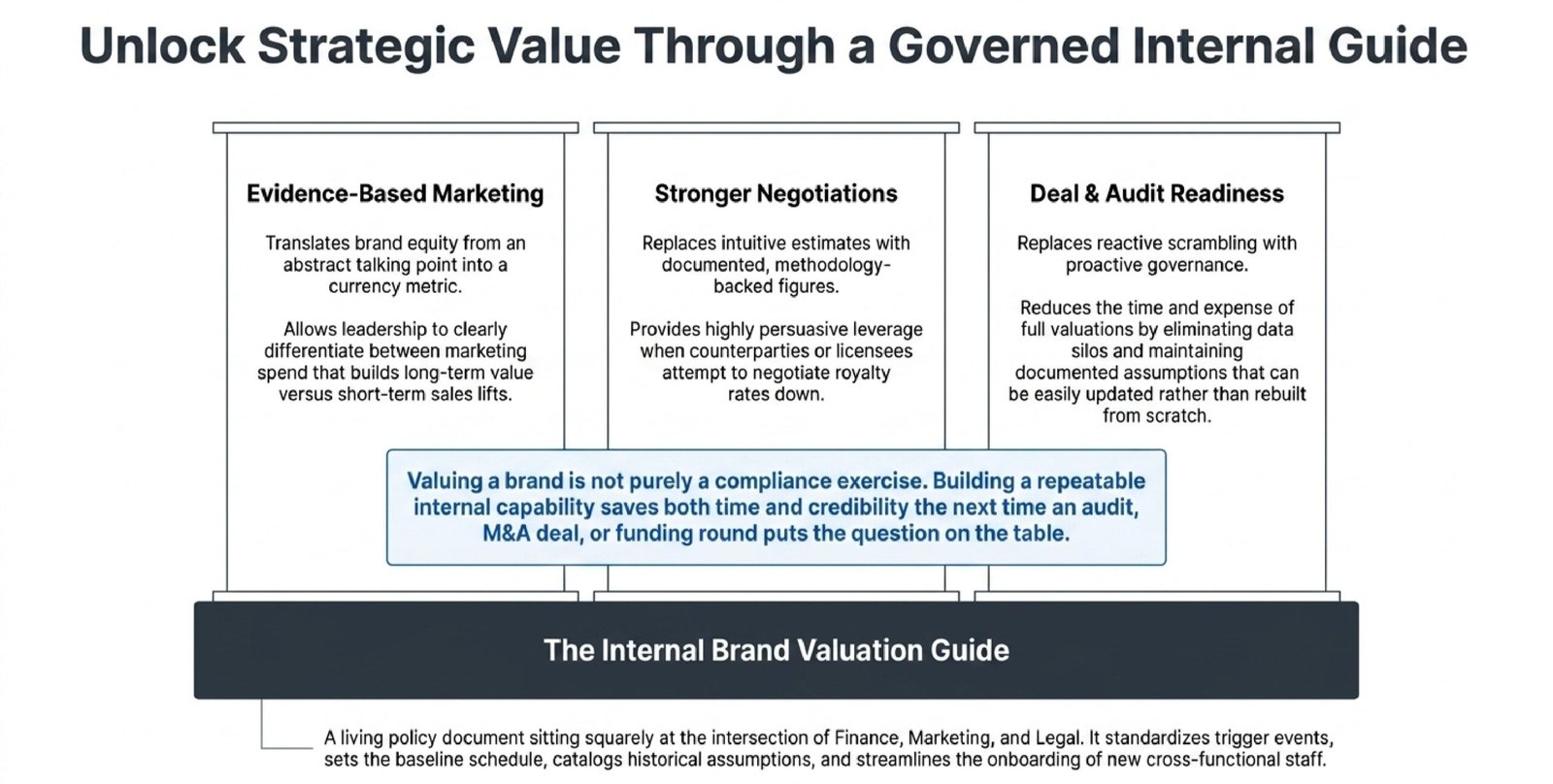
A structured brand value assessment provides leadership with much greater clarity about what they’re spending on marketing is creating long-term value, rather than short-term sales lift, allowing them to have much more evidence-based brand budget discussions with the executive team. It also enhances negotiations for licensing and franchising, as it is much more convincing than an educated guess when a prospective licensee is pushing for a lower royalty rate. Finance teams benefit as well – when an unexpected deal, dispute or reporting deadline arrives, a maintained valuation means that there is no scramble that occurs when an acceptable number is required in days instead of weeks.
The problems are very real, however. Data collection, methodology selection, and getting ready the first time around take longer before a brand valuation can be performed, and may be time consuming and expensive, especially for a first-time use by a company. Also subjective assumptions like royalty rates, discount rates and revenue attribution have to be carefully analysed by external reviewers and auditors and can often result in two reputable valuation firms arriving at different totals for the same brand. Many companies, especially smaller ones, are finding it difficult to afford a full valuation annually when the number may not be used in a decision that year, so it’s better to do it on an event-driven basis, like when the number is actually needed for a decision. Other departments (such as finance, marketing, and legal) may not be managed by the same person, and they often have different priorities and goals that can create delays in the process, so the companies that do this well typically designate a single project owner to coordinate the efforts of the various departments and ensure that the process remains on track.
How Should a Company Approach Valuing Its Brand Going Forward?
The best place to begin is a written internal brand valuation guide that specifies the different events that will result in a new brand valuation – acquisitions, significant rebrands, licensing agreements, lawsuits, or a round of funds – and gives them a general timeline for smaller brand reviews in between. This transforms “how often should a company value its brand” from a “when” question to a “when to” question and helps finance, legal, and marketing departments all reference the same policy and not have to debate the issue again every time a situation arises. It also helps to make the process of onboarding new finance or marketing staff easier, as a well-kept policy document will explain the process of onboarding itself and the owner of the process and when it should be updated.
Helping build internal capacity is as important as the policy itself. Firms that conduct brand asset valuations on a regular basis often build templates, data sources, and relationships with brand valuation firms that allow for quicker and less painful valuations of brand assets. For those in the beginning of their career, this is a really useful field to work up some expertise in, as it relates to finance, marketing, and legal, and early in their career few staff members will have the first-hand experience of it. Contribute to a valuation project, either as a team member responsible for data collection or otherwise, is one of the more effective ways to achieve an all-rounder skill set that is going to highlight in job interviews for finance, strategy or brand management. It also generates the type of cross-functional competence that senior leaders want when staffing deal teams later in a career – no other exercise is done with a number of people in finance, finance, and legal all working on the same deliverable at the same time.
Five Key Steps in the Brand Valuation Process
Most engagements proceed in a similar fashion, regardless of the reason:
- The goal and scope – a value assessment for tax purposes will differ in scope and method from one for a licensing negotiation, litigation, or an M&A transaction, and it’s the number one most common cause of rework later, if it’s done incorrectly at the outset.
- Compile a set of financial data and market statistics, such as past and projected revenues from brand usage, the rate of royalty payments in similar licenses, competitor brand prices, customer awareness and loyalty levels, and so on, which are all relevant to the brand valuation process itself and are factors that make or break its defensibility.
- Choose the method of valuation (income approach, market approach, or cost approach) from among the three methods based on the purpose set in step one and available data, remembering that the income approach is the preferred method where there is no specific reason for using another approach.
- Use the selected brand asset valuation method with proper documentation of all the assumptions (discount rate, royalty rate, useful life, and growth rate) to ensure the output can be reviewed, challenged, and/or audited later without recalling the logic.
- Review and check the results with finance leadership, legal or external advisors and submit the report to the company’s brand valuation guide, which allows the next person who needs the number, in one year or five, to pick up the work without starting from scratch.
Some lessons reappear in a few lessons in several companies that are embarking on this process for the first time. The most common error involves waiting until a transaction is well underway to begin the data collection, which forces the necessary weeks of work into days, and leaves those assumptions to be challenged by auditors and/or counterparties. Another recurring lesson is that scores for a brand can be different in marketing and finance (e.g. awareness versus revenue contribution to the company), and getting those numbers in synch early will save hours in the end. Lastly, companies that perform the first valuation as a compliance exercise rather than a means to evaluate the information for pricing, licensing or marketing investment decisions, reap less value from the valuation. Another one that often happens, but is not always so apparent, is not keeping track of the assumptions that were made; when the exercise is performed again a year or two later, nobody is able to remember why the royalty rate or the discount rate was selected and the team is forced to start from scratch.
Brand Valuation Guide: Common Triggers and Recommended Frequency – How Often a Company Should Value Its Brand
| Trigger | Recommended Frequency |
|---|---|
| Merger or acquisition | Immediately post-deal, then annually for impairment testing |
| Licensing or franchising negotiation | Before each new agreement |
| Litigation or dispute | As required by the case timeline |
| Major rebrand or repositioning | Before and after the change |
| Annual financial reporting (public companies) | At least annually |
| Internal strategic review (private companies) | Every 1–2 years |
Brand Asset Valuation Methods Compared – How Often a Company Should Value Its Brand
| Method | Best Used When |
|---|---|
| Income approach (relief-from-royalty) | Strong revenue data and comparable royalty rates exist |
| Market approach | Sufficient comparable brand transactions are publicly available |
| Cost approach | Historical investment data is reliable but market data is scarce |
Conclusion: Building a Repeatable Answer to How Often a Company Should Value Its Brand
What is the best frequency for a company to value its brand? When a material event requires it, and no less frequently than when the company chooses on a policy basis, not to chance it. With a regularly performed brand value assessment, brand equity becomes a number that can be referenced by finance, legal and marketing teams in decisions, whether that’s a licensing fee, marketing budget or purchase price. Those companies that develop the same brand valuation process; document their brand asset valuation methodology in writing; and keep a “living” brand valuation guide will save themselves time and credibility the next time a deal, audit or funding round comes up. The first step for any company is a small one: document the “red flags” that should trigger a new valuation, designate someone on the company team to run the process, and plan for the first “light touch” review before the external deadline. Building expertise in this area is one more transferable skill between the finance, marketing and legal professions and a good starting point for all future valuation skills and corporate development.