Why Is Company Valuation Important for M&A?

Why Is Company Valuation Important for M&A?

Understanding Why Is Company Valuation Important for M&A

The value of the company is the crux of all mergers and acquisitions in which they get involved; this is what makes them valuable or unprofitable. The importance of Company Valuation comes into light when two parties get down to negotiating their price, as every next step – financing, integration planning, shareholder approval – relies on a number that can be defended. If there is no proper valuation process, both parties could be in trouble of making an overvalued purchase or making a sale with an underpriced value. This article will discuss the importance of valuation in M&A, how it relates to M&A Due Diligence, and what a practical corporate valuation guide should include for professionals pursuing career in the field of deal making, through real-life examples, common mistakes and experiences of dealmakers who have had to learn the hard way. 
Why Is Company Valuation Important for M&A?

What Does Company Valuation Mean in the Context of M&A?

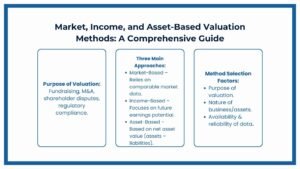
Company valuation, simply put, is the process of determining the value of a business today by analyzing its assets, future earning power, market standing and risk profile. This is not something you can work on in isolation at the negotiating table; it’s what you’re working with when you consider financing and when you think about measuring the performance of the deal. There are three general approaches used by analysts, one based on income, one based on the market, and one based on assets. Each approach paints a slightly different image of the same business, and the skilful practitioner tries to triangulate between the different numbers instead of sticking to one. That is why experienced advisors don’t typically throw over a wall a single point estimate, as it’s much easier to dispute at the negotiating table than a range around a point estimate.

This distinction is very important, as valuation in M&A is forward-looking, not past. They’re actually buying future cash flows, competitive position, and perhaps even intangible assets like brand value, customer relationships, or proprietary technology that don’t exist on a balance sheet at the economic value buyers would appreciate. In a good Corporate Valuation Guide, you’ll see that junior analysts can all use this knowledge to distinguish between a credible valuation memo and a guess in a spreadsheet, knowing which method applies to which situations and why. It also reflects the need to understand the qualitative aspects of the numbers: why customers remain, why margins don’t drop, why competitors haven’t caught up — a model is only as effective as the story behind it that backs up the assumptions. It is important to get this right early on in a career as it is the one skill that senior dealmakers depend on the most when the numbers are under stress during live deal negotiations – and it is that skill which is most likely to differentiate a top tier junior analyst from one who was merely following a template: templates can give you a number, but only analytical instincts can determine whether it is a correct one or not. 

Why Does Company Valuation Importance Grow During M&A Due Diligence?

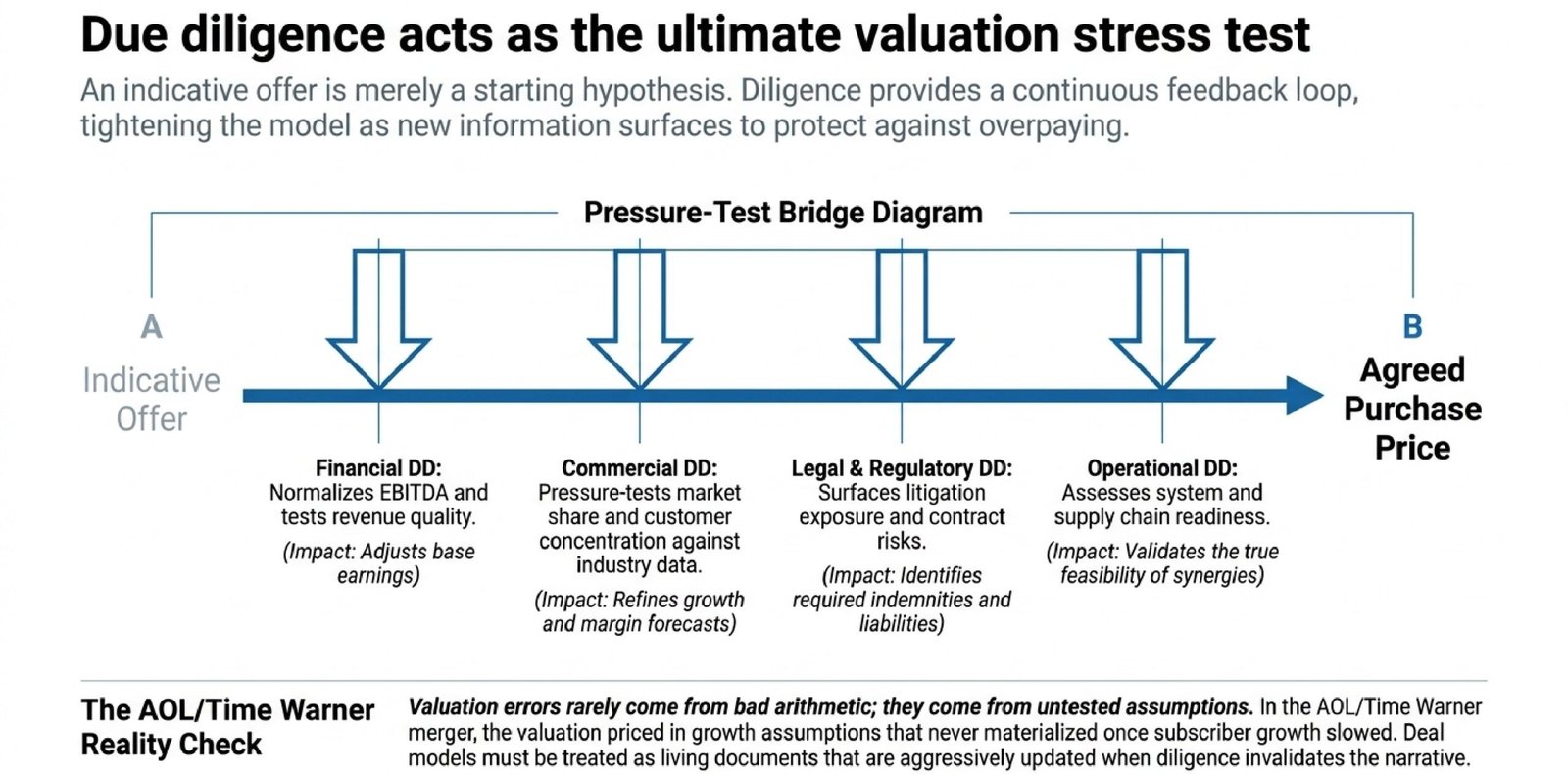
An indication given at the beginning of the negotiations is not often a closing price. From the letter of intent to signing, M&A Due Diligence tests and challenges every assumption underlying the initial number — revenue quality, customer concentration, contingent liabilities, litigation exposure and the durability of projected synergies. Due diligence reveals the true nature of a company; this is why the importance of the Company Valuation increases as a transaction moves forward, rather than decreasing. The initial offer is not a hard number, as it can be significantly altered due to one unmentioned liability, a customer contract that is coming to an end or an inflated retention number. Skippers or those who crammed this exercise into the deal timeline often find out what they missed out on only after closing when the cost of fixing it has become significantly higher than during the deal negotiation and the goodwill to renegotiate with the seller is often lost.

In reality, the process of conducting due diligence and valuation occurs in parallel and is an ongoing process that continues to feed back into the other. Financial due diligence teams rationalise earnings, identify one-off items; commercial due diligence teams test market share and growth expectations against independent industry data; legal and regulatory due diligence teams identify risks to be priced in, ring fenced with indemnities, or resolved prior to closing. Meanwhile, the teams performing the operations determine if the target’s systems, supply chains and key employees can realistically run the growth embedded in the model, and human resource professionals will frequently look at retention risk for the executives that the deal relies on. These types of findings are commonly collated by junior analysts, and if you have a grasp of what each of these workstreams is doing to the numbers, you’ll add the most value early in a deal career. The table below shows how a typical M&A Due Diligence process relates to the valuation outcome(s) at each stage of the deal. 

Table 1: M&A Due Diligence Process Flow and Valuation Impact – Why Is Company Valuation Important for M&A
Stage Key Activities Impact on Valuation
Preliminary Screening Initial financial review, strategic fit assessment, indicative offer preparation Sets a starting valuation range based on public data and management estimates
Financial Due Diligence Normalizing EBITDA, reviewing working capital, testing revenue quality Adjusts base earnings used in DCF and multiples analysis
Commercial & Operational DD Market sizing, customer concentration checks, supply chain review Refines growth and margin assumptions in the forecast
Legal & Regulatory DD Contract review, litigation search, compliance and antitrust checks Identifies liabilities requiring price adjustment or indemnities
Valuation Finalization Reconciling findings, sensitivity analysis, final negotiation Produces the agreed purchase price and deal structure

What Are the Five Key Steps in a Corporate Valuation Guide for Deal-Makers?

A Corporate Valuation Guide for the professional newcomer provides a framework that can be used to transform a theoretical approach into a repeatable process instead of a one-off that needs to be reinvented for each new assignment. Having done the same deal on each one, it will also be easier to see on any given deal if the numbers are unusual in comparison to past deals, which may be the first red flag that something is wrong with their numbers. Many analysts have a running list of assumptions and outcomes based on previous transactions for this reason – the patterns that can go unnoticed in one transaction may become more apparent when comparing multiple transactions side by side. The following five steps outline the process of a valuation assignment from start to finish by experienced analysts.

  1. Choose the appropriate valuation technique. Select the primary method that you will use for the analysis based on data availability, industry characteristics, and growth stage of the target, not necessarily based on which method you think is the easiest to construct, as an inaccurate primary method can have a subtle impact on the entire analysis.
  1. Normalise historical financials. Remove one-off items, related party adjustments and owner-specific expenses and accounting anomalies and let the earnings base upon which the projections are based accurately reflect the business’ actual performance, clearly record each adjustment and be able to explain it later.
  2. Make a forecast that is defensible. In real market data, historical trends and management’s ability to meet previous revenue targets and margin goals, avoiding hockey stick assumptions that will come to a crashing end during negotiation and/or when compared to actual results.
  3. Measure and evaluate synergies separately. Recognize that cost and revenue synergies exist as a separate line in a deal model and give each a probability-weighted realism check before including them in the price, as they are the most wildly exaggerated line in any deal model.

5.Triangulate and sensitize the output. Match the initial valuation with at least one other valuation method and complete a sensitivity analysis of the key valuation factors (discount rate, growth rate, and margin) to see how much the price will change if any of the assumptions are only slightly altered.

These five steps are a checklist that will apply to any industry, for any deal, and that will be beneficial to revisit whenever the numbers don’t seem right when you’re getting to the negotiating table. 

How Do Real-World Cases Show Company Valuation Importance?

One of the most frequently cited cautionary tales in deal history is that of the 2000 AOL-Time Warner merger. The deal was worked out in the height of the dot-com bubble and the valuation of the stock on AOL was given to a much bigger, asset-heavy media company. In the market correction period, Time Warner had one of the biggest goodwill write-downs in corporate history, due in part to the original valuation putting in growth expectations that failed to materialize as its advertising revenue and subscriber growth slowed considerably. It’s a case that is a textbook example of company valuation importance, and it’s the one the first time junior analysts are sent in to study because they see how a technically sound model can be wrong if the assumptions it includes are not grounded in reality; that’s why it’s regularly used as the first case given to junior analysts.

The other lesson is from Hewlett-Packard’s 2011 purchase of a British enterprise software firm. HP subsequently wrote off billions of dollars of the amount it paid in a bid to claim the numbers it reported before the deal were exaggerated. It is unclear whether all the claims were true, but it does not matter because the point of the episode is that for software and IP-rich companies with little physical asset to serve as a cross-check on the numbers, the numbers can be as important as the physical assets. The third example to consider is the 1998 merger of Daimler-Benz with Chrysler, which was presented as a merger of equals, but in fact was an acquisition, resulting in cultural and integration issues that took away most of the value created and culminating in the two companies separating once more years later. Whether the valuation is performed by a small or large team, and whether the parties are small or large, all of these cases indicate that the reliability of the valuation depends on the diligence, structuring and assumptions that underlie it.

What’s worth remembering for the junior pros studying these deals is that the common denominator is that these are not deals where the valuation is off due to poor math. They are based on assumptions that were never sufficiently challenged with facts, whether because they are based on a growth rate that was taken off the shelf from the management team’s projections, or because they are a synergy level that was picked off the chart in a boardroom, but not tested in the business. One of the most transferable skills for a junior analyst is getting in the habit of knowing the source of every key number, and how sure the evidence is. This quality extends beyond any one deal, as well — the same desire to question assumptions can be applied to the business plan, the budget forecast, or any other paper in which numbers are thrown out more confidently than the case for them. 

What Challenges Arise During M&A Due Diligence and Valuation, and What Lessons Have Dealmakers Learned?

Even well-resourced deals have multiple recurring issues. The fact that there is a lack of information between buyer and seller means that the buyer may only begin to have full information later in the process, and sellers will naturally pitch the business in the most positive light. Intangible assets, brand value, software, customer relationships, workforce know-how, all of it is more difficult to assess than a physical asset, and currency, tax and regulatory considerations are all thrown in when conducting cross-border transactions. All of this is exacerbated by time pressure — deal teams often have short exclusivity windows during which they cannot verify each assumption in-depth. The most frequent issue is overestimating synergy: because deal teams feel they have to justify the price, they sometimes inflate the value of the synergy they can achieve, which, when the pressure eases, operations teams can never meet and often the acquisition company ends up paying for a never-to-be-realized value. But the cultural and organizational differences between the two companies also pose a lurking risk that not even a financial model eliminates, and can make or break any synergies assumed in a valuation after closing.

What these challenged learned from the lessons is the same. When negotiations heat up, having a disciplined walk-away price ahead of them will put the valuation model over the deal, even if the deal has an important strategic value or if a competing bidder seems to be in the same ballpark. The independent valuation review, which is not performed by the deal team pushing the case for the transaction, is an important countermeasure against optimism bias, which can seep into even the most good-intentioned valuation analysis, especially when bonuses and other incentives to perform the transaction are attached to closing. Finally, measuring actual performance after the transaction, and comparing it to the original assumptions, will also help in closing the loop, enabling teams to adjust models and assumptions for future transactions instead of using the same flawed ones in successive transactions. Very few of these lessons involve some pretty sophisticated tools: discipline is required—and it’s the discipline that separates teams who have a good long-term deal track record from those who win deals but can’t make them pay off. A comparative table is provided below of the three fundamental valuation methods as a reference for anyone creating their own Corporate Valuation Guide. 

Table 2: Comparative Corporate Valuation Guide to Method Selection – Why Is Company Valuation Important for M&A
Method Best Used When Key Limitation
Discounted Cash Flow Target has predictable, forecastable cash flows Highly sensitive to discount rate and growth assumptions
Market Multiples Comparable listed companies or recent transactions exist Comparables may not reflect target’s specific risk profile
Asset-Based Valuation Asset-heavy businesses or distressed/liquidation scenarios Understates value of intangible assets and future earnings potential

Why Is Company Valuation Important for M&A: Conclusion

Company valuation is not a one-time process done at the beginning of the transaction; it is an ongoing practice that influences the negotiation process, financing options, and success of the deal in the long run. M&A professionals interested in establishing credibility in the process should view each valuation as a “living model”, regularly updated as M&A Due Diligence brings new information to light, tested multiple methods, and stress tested with regard to assumptions that are important. A Corporate Valuation Guide, learning from bad deals that went bad because of valuation issues, and maintaining a healthy skepticism about synergy estimates that seem too good to be true are some good practices that distinguish good dealmakers from those who will just run the numbers once and move on. The three habits for people in the early days of the business: Always ask what would have to be true for a forecast to be true, always look for standalone value and synergy value in any model separately, and always view due diligence findings as new information to be integrated; never an obstacle to be argued away. It is also important to keep in mind that a valuation is only a means to a goal, and that goal is to make a better decision, not to defend once a valuation has been prepared; that is, once a model is created primarily to justify a price that has already been determined, its value as an analytical safeguard is reduced. They’re not concepts, but mundane, consistent practices that will ultimately distinguish analysts who are trusted to handle bigger deals from those who aren’t. The knowledge of the importance of company valuation is what enables parties, both buyers and sellers, to feel confident of the price in a purchase (and that doesn’t necessarily imply a good one), and that’s one assumption at a time, throughout the process – from the first indicative offer to the final signature. 
Frequently Asked Questions

Q1. Why is company valuation important in M&A?

Company valuation provides an objective estimate of a business’s worth, helping buyers and sellers negotiate a fair purchase price while reducing financial and strategic risks.

Common valuation methods include Discounted Cash Flow (DCF), Comparable Company Analysis, Precedent Transaction Analysis, and Asset-Based Valuation, depending on the company’s characteristics.

A reliable valuation supports transparent negotiations by providing evidence-based pricing, enabling both parties to reach a mutually beneficial agreement.

Yes. An inaccurate valuation can result in overpaying, undervaluing a business, failed negotiations, financing challenges, or poor post-merger performance.

Important factors include financial performance, cash flow, profitability, growth potential, industry outlook, market conditions, competitive position, and the value of tangible and intangible assets.

Why Is Company Valuation Important for M&A?

Understanding Why Is Company Valuation Important for M&A

The value of the company is the crux of all mergers and acquisitions in which they get involved; this is what makes them valuable or unprofitable. The importance of Company Valuation comes into light when two parties get down to negotiating their price, as every next step – financing, integration planning, shareholder approval – relies on a number that can be defended. If there is no proper valuation process, both parties could be in trouble of making an overvalued purchase or making a sale with an underpriced value. This article will discuss the importance of valuation in M&A, how it relates to M&A Due Diligence, and what a practical corporate valuation guide should include for professionals pursuing career in the field of deal making, through real-life examples, common mistakes and experiences of dealmakers who have had to learn the hard way. 

Why Is Company Valuation Important for M&A?

What Does Company Valuation Mean in the Context of M&A?

Company valuation, simply put, is the process of determining the value of a business today by analyzing its assets, future earning power, market standing and risk profile. This is not something you can work on in isolation at the negotiating table; it’s what you’re working with when you consider financing and when you think about measuring the performance of the deal. There are three general approaches used by analysts, one based on income, one based on the market, and one based on assets. Each approach paints a slightly different image of the same business, and the skilful practitioner tries to triangulate between the different numbers instead of sticking to one. That is why experienced advisors don’t typically throw over a wall a single point estimate, as it’s much easier to dispute at the negotiating table than a range around a point estimate.

This distinction is very important, as valuation in M&A is forward-looking, not past. They’re actually buying future cash flows, competitive position, and perhaps even intangible assets like brand value, customer relationships, or proprietary technology that don’t exist on a balance sheet at the economic value buyers would appreciate. In a good Corporate Valuation Guide, you’ll see that junior analysts can all use this knowledge to distinguish between a credible valuation memo and a guess in a spreadsheet, knowing which method applies to which situations and why. It also reflects the need to understand the qualitative aspects of the numbers: why customers remain, why margins don’t drop, why competitors haven’t caught up — a model is only as effective as the story behind it that backs up the assumptions. It is important to get this right early on in a career as it is the one skill that senior dealmakers depend on the most when the numbers are under stress during live deal negotiations – and it is that skill which is most likely to differentiate a top tier junior analyst from one who was merely following a template: templates can give you a number, but only analytical instincts can determine whether it is a correct one or not. 

Why Does Company Valuation Importance Grow During M&A Due Diligence?

An indication given at the beginning of the negotiations is not often a closing price. From the letter of intent to signing, M&A Due Diligence tests and challenges every assumption underlying the initial number — revenue quality, customer concentration, contingent liabilities, litigation exposure and the durability of projected synergies. Due diligence reveals the true nature of a company; this is why the importance of the Company Valuation increases as a transaction moves forward, rather than decreasing. The initial offer is not a hard number, as it can be significantly altered due to one unmentioned liability, a customer contract that is coming to an end or an inflated retention number. Skippers or those who crammed this exercise into the deal timeline often find out what they missed out on only after closing when the cost of fixing it has become significantly higher than during the deal negotiation and the goodwill to renegotiate with the seller is often lost.

In reality, the process of conducting due diligence and valuation occurs in parallel and is an ongoing process that continues to feed back into the other. Financial due diligence teams rationalise earnings, identify one-off items; commercial due diligence teams test market share and growth expectations against independent industry data; legal and regulatory due diligence teams identify risks to be priced in, ring fenced with indemnities, or resolved prior to closing. Meanwhile, the teams performing the operations determine if the target’s systems, supply chains and key employees can realistically run the growth embedded in the model, and human resource professionals will frequently look at retention risk for the executives that the deal relies on. These types of findings are commonly collated by junior analysts, and if you have a grasp of what each of these workstreams is doing to the numbers, you’ll add the most value early in a deal career. The table below shows how a typical M&A Due Diligence process relates to the valuation outcome(s) at each stage of the deal. 

Table 1: M&A Due Diligence Process Flow and Valuation Impact – Why Is Company Valuation Important for M&A
Stage Key Activities Impact on Valuation
Preliminary Screening Initial financial review, strategic fit assessment, indicative offer preparation Sets a starting valuation range based on public data and management estimates
Financial Due Diligence Normalizing EBITDA, reviewing working capital, testing revenue quality Adjusts base earnings used in DCF and multiples analysis
Commercial & Operational DD Market sizing, customer concentration checks, supply chain review Refines growth and margin assumptions in the forecast
Legal & Regulatory DD Contract review, litigation search, compliance and antitrust checks Identifies liabilities requiring price adjustment or indemnities
Valuation Finalization Reconciling findings, sensitivity analysis, final negotiation Produces the agreed purchase price and deal structure

What Are the Five Key Steps in a Corporate Valuation Guide for Deal-Makers?

A Corporate Valuation Guide for the professional newcomer provides a framework that can be used to transform a theoretical approach into a repeatable process instead of a one-off that needs to be reinvented for each new assignment. Having done the same deal on each one, it will also be easier to see on any given deal if the numbers are unusual in comparison to past deals, which may be the first red flag that something is wrong with their numbers. Many analysts have a running list of assumptions and outcomes based on previous transactions for this reason – the patterns that can go unnoticed in one transaction may become more apparent when comparing multiple transactions side by side. The following five steps outline the process of a valuation assignment from start to finish by experienced analysts.

  1. Choose the appropriate valuation technique. Select the primary method that you will use for the analysis based on data availability, industry characteristics, and growth stage of the target, not necessarily based on which method you think is the easiest to construct, as an inaccurate primary method can have a subtle impact on the entire analysis.
  1. Normalise historical financials. Remove one-off items, related party adjustments and owner-specific expenses and accounting anomalies and let the earnings base upon which the projections are based accurately reflect the business’ actual performance, clearly record each adjustment and be able to explain it later.
  2. Make a forecast that is defensible. In real market data, historical trends and management’s ability to meet previous revenue targets and margin goals, avoiding hockey stick assumptions that will come to a crashing end during negotiation and/or when compared to actual results.
  3. Measure and evaluate synergies separately. Recognize that cost and revenue synergies exist as a separate line in a deal model and give each a probability-weighted realism check before including them in the price, as they are the most wildly exaggerated line in any deal model.

5.Triangulate and sensitize the output. Match the initial valuation with at least one other valuation method and complete a sensitivity analysis of the key valuation factors (discount rate, growth rate, and margin) to see how much the price will change if any of the assumptions are only slightly altered.

These five steps are a checklist that will apply to any industry, for any deal, and that will be beneficial to revisit whenever the numbers don’t seem right when you’re getting to the negotiating table. 

How Do Real-World Cases Show Company Valuation Importance?

One of the most frequently cited cautionary tales in deal history is that of the 2000 AOL-Time Warner merger. The deal was worked out in the height of the dot-com bubble and the valuation of the stock on AOL was given to a much bigger, asset-heavy media company. In the market correction period, Time Warner had one of the biggest goodwill write-downs in corporate history, due in part to the original valuation putting in growth expectations that failed to materialize as its advertising revenue and subscriber growth slowed considerably. It’s a case that is a textbook example of company valuation importance, and it’s the one the first time junior analysts are sent in to study because they see how a technically sound model can be wrong if the assumptions it includes are not grounded in reality; that’s why it’s regularly used as the first case given to junior analysts.

The other lesson is from Hewlett-Packard’s 2011 purchase of a British enterprise software firm. HP subsequently wrote off billions of dollars of the amount it paid in a bid to claim the numbers it reported before the deal were exaggerated. It is unclear whether all the claims were true, but it does not matter because the point of the episode is that for software and IP-rich companies with little physical asset to serve as a cross-check on the numbers, the numbers can be as important as the physical assets. The third example to consider is the 1998 merger of Daimler-Benz with Chrysler, which was presented as a merger of equals, but in fact was an acquisition, resulting in cultural and integration issues that took away most of the value created and culminating in the two companies separating once more years later. Whether the valuation is performed by a small or large team, and whether the parties are small or large, all of these cases indicate that the reliability of the valuation depends on the diligence, structuring and assumptions that underlie it.

What’s worth remembering for the junior pros studying these deals is that the common denominator is that these are not deals where the valuation is off due to poor math. They are based on assumptions that were never sufficiently challenged with facts, whether because they are based on a growth rate that was taken off the shelf from the management team’s projections, or because they are a synergy level that was picked off the chart in a boardroom, but not tested in the business. One of the most transferable skills for a junior analyst is getting in the habit of knowing the source of every key number, and how sure the evidence is. This quality extends beyond any one deal, as well — the same desire to question assumptions can be applied to the business plan, the budget forecast, or any other paper in which numbers are thrown out more confidently than the case for them. 

What Challenges Arise During M&A Due Diligence and Valuation, and What Lessons Have Dealmakers Learned?

Even well-resourced deals have multiple recurring issues. The fact that there is a lack of information between buyer and seller means that the buyer may only begin to have full information later in the process, and sellers will naturally pitch the business in the most positive light. Intangible assets, brand value, software, customer relationships, workforce know-how, all of it is more difficult to assess than a physical asset, and currency, tax and regulatory considerations are all thrown in when conducting cross-border transactions. All of this is exacerbated by time pressure — deal teams often have short exclusivity windows during which they cannot verify each assumption in-depth. The most frequent issue is overestimating synergy: because deal teams feel they have to justify the price, they sometimes inflate the value of the synergy they can achieve, which, when the pressure eases, operations teams can never meet and often the acquisition company ends up paying for a never-to-be-realized value. But the cultural and organizational differences between the two companies also pose a lurking risk that not even a financial model eliminates, and can make or break any synergies assumed in a valuation after closing.

What these challenged learned from the lessons is the same. When negotiations heat up, having a disciplined walk-away price ahead of them will put the valuation model over the deal, even if the deal has an important strategic value or if a competing bidder seems to be in the same ballpark. The independent valuation review, which is not performed by the deal team pushing the case for the transaction, is an important countermeasure against optimism bias, which can seep into even the most good-intentioned valuation analysis, especially when bonuses and other incentives to perform the transaction are attached to closing. Finally, measuring actual performance after the transaction, and comparing it to the original assumptions, will also help in closing the loop, enabling teams to adjust models and assumptions for future transactions instead of using the same flawed ones in successive transactions. Very few of these lessons involve some pretty sophisticated tools: discipline is required—and it’s the discipline that separates teams who have a good long-term deal track record from those who win deals but can’t make them pay off. A comparative table is provided below of the three fundamental valuation methods as a reference for anyone creating their own Corporate Valuation Guide. 

Table 2: Comparative Corporate Valuation Guide to Method Selection – Why Is Company Valuation Important for M&A
Method Best Used When Key Limitation
Discounted Cash Flow Target has predictable, forecastable cash flows Highly sensitive to discount rate and growth assumptions
Market Multiples Comparable listed companies or recent transactions exist Comparables may not reflect target’s specific risk profile
Asset-Based Valuation Asset-heavy businesses or distressed/liquidation scenarios Understates value of intangible assets and future earnings potential

Why Is Company Valuation Important for M&A: Conclusion

Company valuation is not a one-time process done at the beginning of the transaction; it is an ongoing practice that influences the negotiation process, financing options, and success of the deal in the long run. M&A professionals interested in establishing credibility in the process should view each valuation as a “living model”, regularly updated as M&A Due Diligence brings new information to light, tested multiple methods, and stress tested with regard to assumptions that are important. A Corporate Valuation Guide, learning from bad deals that went bad because of valuation issues, and maintaining a healthy skepticism about synergy estimates that seem too good to be true are some good practices that distinguish good dealmakers from those who will just run the numbers once and move on. The three habits for people in the early days of the business: Always ask what would have to be true for a forecast to be true, always look for standalone value and synergy value in any model separately, and always view due diligence findings as new information to be integrated; never an obstacle to be argued away. It is also important to keep in mind that a valuation is only a means to a goal, and that goal is to make a better decision, not to defend once a valuation has been prepared; that is, once a model is created primarily to justify a price that has already been determined, its value as an analytical safeguard is reduced. They’re not concepts, but mundane, consistent practices that will ultimately distinguish analysts who are trusted to handle bigger deals from those who aren’t. The knowledge of the importance of company valuation is what enables parties, both buyers and sellers, to feel confident of the price in a purchase (and that doesn’t necessarily imply a good one), and that’s one assumption at a time, throughout the process – from the first indicative offer to the final signature. 
Frequently Asked Questions

Q1. Why is company valuation important in M&A?

Company valuation provides an objective estimate of a business’s worth, helping buyers and sellers negotiate a fair purchase price while reducing financial and strategic risks.

Common valuation methods include Discounted Cash Flow (DCF), Comparable Company Analysis, Precedent Transaction Analysis, and Asset-Based Valuation, depending on the company’s characteristics.

A reliable valuation supports transparent negotiations by providing evidence-based pricing, enabling both parties to reach a mutually beneficial agreement.

Yes. An inaccurate valuation can result in overpaying, undervaluing a business, failed negotiations, financing challenges, or poor post-merger performance.

Important factors include financial performance, cash flow, profitability, growth potential, industry outlook, market conditions, competitive position, and the value of tangible and intangible assets.

Related Posts

Everything You Need to Know About Company Valuation with Valueteam

Valueteam delivers precise company valuation services to support fundraising, mergers, acquisitions, and strategic decision-making.