How Can SMEs Increase Company Value?

How Can SMEs Increase Company Value?

Understanding How SMEs Can Increase Company Value?

Small and medium-sized businesses (SMEs) can improve the value of their company by improving financial performance, creating recurring revenue, professionalizing the company, and decreasing the reliance on the founder. Summarized, value increases as a business becomes more predictable, more scalable, and less risky to a future buyer or investor. It is important for owners planning to sell or fundraise, but also for employees and job seekers as well, because companies that are disciplined in managing their value will also be more stable to work for, have clearer career paths, and be run with discipline. By knowing the basics of an SME business valuation guide, every level of practitioner can understand the impact of daily business decisions, such as pricing, hiring, systems, and customer relationships, on the overall financial situation of a business. It helps to dissect the valuation process, provides real-world examples from various industries, and includes a step-by-step process that can be leveraged immediately by a junior to middle-tier employee, whether they’re advising a business from the inside, consulting for a business, or creating their own business from scratch. At the end of the course, you will be able to describe, simply, how two businesses with the same income can have different valuations—and how to make them more alike. 
How Can SMEs Increase Company Value?

What Is a Business Valuation and Why Does It Matter for SMEs?

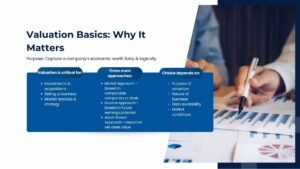
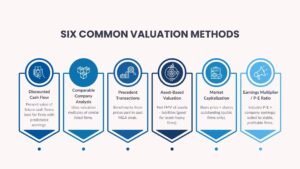
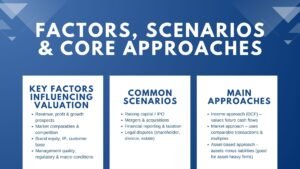
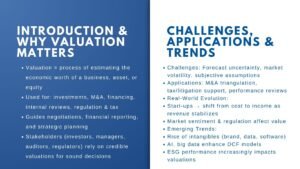
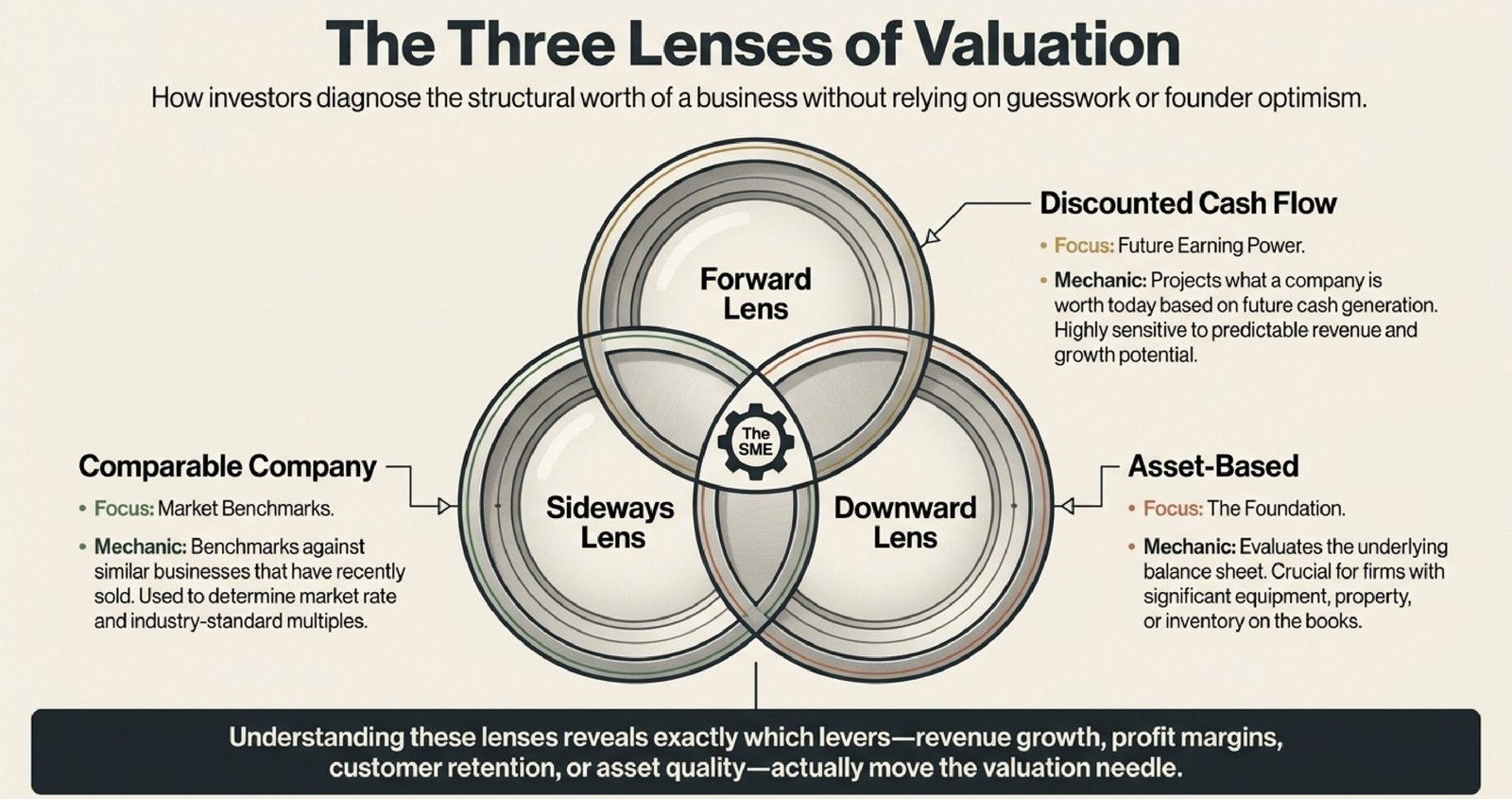
A business valuation is the process of determining the present worth of a business, which is based on the business’s earnings, assets, market position and future growth potential. This is not only a term for the merger of two large corporations, but it is also a tool that SMEs use when they require capital, add a co-founder, secure a loan, deal with a shareholder conflict, or plan their exit. SMEs do not normally have a market price that is constantly updated with every second passing, and as such, the value of the business is determined on the basis of discounted cash flow analysis, comparable company analysis, or asset-based valuation. Each method examines the business in a slightly different way: discounted cash flow analysis emphasizes the future earning capacity of the business, comparable company analysis compares to other businesses that have recently been sold, and asset-based valuation is typically used for a business that has substantial equipment, property, or inventory listed on its financial books. Understanding these methods will be highly useful for professionals working with or within SMEs as they will make them better able to determine which levers are truly moving the needle – rather than depending on guesswork or founder optimism – in terms of valuation.

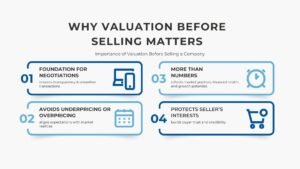
Business valuation planning is important because it makes valuation more than just an event; it becomes a management practice. Well-managed SMEs examine the drivers for their valuation regularly, not just in an emergency such as a sale or an investment round, but as an annual health check-up. This strategy allows the owners and their team to make the necessary improvements before the structural problems are heavily discounted at the due diligence stage by a prospective purchaser, such as an over-reliance on one client, antiquated inventory systems, or poor bookkeeping. In reality, it can be as simple as spending a couple of hours a quarter to look at metrics like gross margin, customer churn and aging of accounts receivable rather than just once a year at tax season. As a junior finance, operations, or strategy professional, knowing how to read and understand a valuation report is a valuable asset—it teaches you to think as an investor even if you are in a day-to-day operations job, and it tells future employers that you understand the impact of business decisions on financial results. This mindset can be useful for anyone in an organization who never directly interacts with a spreadsheet, such as a sales clerk, customer service worker, or product developer, because all of these roles indirectly impact the same metrics that a valuation is ultimately based on. 

How Do Real SMEs Successfully Increase Company Worth?

Imagine a medium-sized logistics business based in Southeast Asia that was taking 2 years and almost 3 years to convert from ad-hoc trucking contracts to signed multi-year contracts with retail and manufacturing clients. For a long time, about 70 percent of its income was generated by a series of one-off jobs that it would book a few weeks ahead, which was very difficult to predict and caused the company to be sensitive to seasonal downturns. This eliminated the unpredictability of transactional work and increased the contract opportunities for the company, making the cash flow much more predictable and turning clients into long-term partners rather than repeating the negotiating process. The investors were approached by the owners of the company for the funds required for expansion of the business, and a materially higher valuation multiple is justified because of the predictable revenue stream that the company was providing, as compared to their competitors, who were still dependent on spot contracts. The latter is always welcome, but the former is the lesson that is seldom learned, and that is always more valuable: buyers and investors always pay more for certainty than for scale. This transformation also impacted the company’s internal operations, as they no longer had to rely on finding jobs at the last minute, which reduced fuel usage and, as an added bonus, ensured better driver retention. Later, junior analysts involved in the deal said the contracts were the easy part; what they faced were their salespeople, who believed they could make more money making quick, on-the-spot sales, and getting them to buy into the process of negotiating multi-year contracts.

A second example is a manufacturing company in Eastern Europe whose business was run by a family that has been frustrated in attracting outside investments for years, despite having a fairly steady stream of sales, because most of the business was with the aging founder. All major accounts, price decisions, and supplier discussions went through one person, and that meant that the business had a huge “key person risk” that concerned investors regarding what would happen if the person left. The company identified its processes, brought on a new sales manager, and adopted a customer relationship management system, so that the institutional knowledge wasn’t confined to one individual. This was one structural change that was later listed by the eventual investor as one of the reasons for the deal being done: It showed that the business was able to operate—and even expand—without the founder. In both situations, it’s the little, incremental adjustments to the operation that build up in value over time. It is also important to note that neither transformation was achieved in a single day – both businesses had some internal discontent, especially from employees who were used to doing things in the way they had always been done, so operational change is as much about managing people as it is about managing numbers.

Table 1: SME Examples — Increase Company Worth in Practice
Company TypeMain WeaknessAction TakenValuation Impact
Logistics firmUnpredictable, one-off revenueShifted to multi-year client contractsHigher revenue multiple from investors
ManufacturerHeavy key-person dependencyHired a sales manager, added a CRM systemReduced buyer risk discount
Retail chainThin profit marginsRenegotiated supplier terms and pricingImproved EBITDA and cash flow

What Are the Benefits and Challenges of Business Valuation Planning?

Structured business valuation planning can provide a range of benefits beyond a future sale. By continually monitoring the value of their company, owners will be better able to understand where the actual value within their company is coming from, and use this understanding to better inform their pricing, hiring, inventory management and even marketing spend allocations. It also has a huge advantage in negotiation: a firm that knows its numbers can stand up and defend the asking price, provide evidence and documentation, and is likely to reduce the negotiating time while creating trust with counterparties. Allowing them to be emotional and/or optimistic will cause negotiations to drag on. A similar discipline extends beyond Wall Street, too: leaders who pay close attention to valuation metrics are often the first to notice issues, like a falling gross margin or declining sales volume, as early as possible, before they become serious. When there’s a consistent practice of valuing the business, it can have a positive impact on employees’ budgeting, which translates to having a better understanding of performance indicators that are actually tied to business outcomes, making career planning and skill development more aligned with business goals. Importantly, a team that appreciates how the work will relate to the valuation drivers tends to make sounder day-to-day decisions, such as deciding to focus on a project that will make them happier to serve customers versus a project that will give them one-time revenue but little lasting value.

The difficulties, however, are very real and should be admitted frankly. There are some SME owners who do not opt for formal valuation because they are not used to giving financial details to outsiders or because of the negative impact of an early estimate if the business is not optimized in obvious ways. Another frequently seen challenge is data quality, with many smaller businesses having data inconsistencies due to keeping records across a variety of accounting systems, spreadsheets, or even paper-based systems, making it very difficult to obtain an accurate valuation without data cleaning first. Another limitation is time—even though a good valuation will yield great long-term benefits, owners who are working on a lean staff tend to delay the valuation process because it takes time to do and is also competing with the demands of sales, hiring, and customer service. Then there is the tendency to make assumptions about future growth that makes the number look good, which will be met on due diligence by experienced investors and buyers. Being prepared to address these challenges early – not when a deal would have otherwise come to a standstill or a loan application would have been turned down – can make the difference between a well-prepared SME and those who are caught off guard at the last minute. It’s a great idea to have one person internally, usually in finance or operations, who is responsible for maintaining the data on valuation throughout the year, not just when it comes up at the crisis or even when it comes time for a deal.

What Are the Five Key Steps to Increase Company Worth?

The following five steps are practical and widely applicable and are commonly effective in boosting company value for SMEs across manufacturing, services, logistics and retail businesses. None of these initiatives takes a huge budget; many require consistency and follow-through, more than money.

  1. Diversify the customer base. Minimizing the concentration risk and also making revenue more resilient if one or two large clients are lost are among the first things buyers and investors consider when doing due diligence, which is exactly why it’s important to reduce reliance on one or two large clients.
  2. Make and maintain financial records. Clean and consistent bookkeeping, as well as audited or independently reviewed financial statements, provide investors, lenders, and buyers with true confidence in the numbers associated with the valuation and significantly shorten a future due-diligence process.
  3. Develop recurring revenue streams. Subscription models, service contracts, or maintenance agreements provide more predictable revenues, and, in the eyes of the market, they are worth more than one-off sales, because they eliminate uncertainty in predicting the future.
  4. Reduce founder dependency. By passing on vital client accounts, expertise, and business decisions down to a capable management team, the business shows it can keep on going and prosper without the one person who is serving as its anchor, reducing the risk premium that buyers apply.
  5. Improve operational efficiency. Improved internal processes, reduced non-essential overhead, and simple technology systems immediately boost company value and are among the most obvious and manageable factors to affect a company’s value over a comparatively short period.
Table 2: Five Steps to Increase Company Worth — Expected Timeframe
Steps to Increase Company WorthPrimary EffectTypical Timeframe
Diversify customer baseLower concentration risk6–18 months
Strengthen financial recordsFaster, smoother due diligence3–6 months
Build recurring revenueMore predictable cash flow12–24 months
Reduce founder dependencyLower buyer risk premium12–18 months
Improve operational efficiencyHigher profit margins3–12 months

This table is a helpful guide for anyone developing an SME business valuation guide for internal use, as it correlates each action with the type of result that a manager, investor or potential employee should see, and what a realistic timeline for the number of days the results should be seen. 

How Can SMEs Increase Company Value?- Conclusion

Building company value is more about making a series of thoughtful improvements, rather than a single large one, in the areas of money, operations and customers over time. Valuation that is treated as a continuing discipline, and not an “opt-in” option before the time of a sale or a funding pitch, is likely to result in stronger business development and, consequently, stronger, more resilient businesses in the process, and give the entrepreneur a significant advantage in negotiating from strength when opportunities arise. The takeaway for all professionals is simple: keep financial records clean, strive to limit reliance on any one client or key individual and seek real methods of generating more predictable, recurring revenue. Combine that with consistent, fair assessments of the company’s progress and consider everything you do to improve the business as a part of the long-term value of the company, not just a single project. If you don’t own a business yourself, but you’d like to know these principles, then you’re more valuable to any business you work in, and more discerning about an opportunity when you’re ready to create a business of your own. 
Frequently Asked Questions

Q1. How is company value calculated for SMEs?

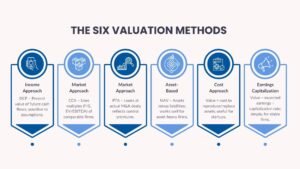
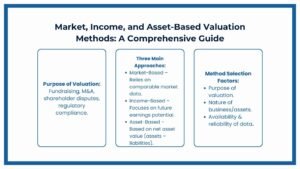
SME value is commonly determined using earnings multiples, discounted cash flow, asset-based valuation, or comparable market transactions depending on the business.

Improving profitability, increasing recurring revenue, reducing customer concentration, maintaining strong cash flow, and demonstrating sustainable growth typically have the greatest impact.

Yes. Businesses can improve value by optimizing operations, strengthening financial records, reducing unnecessary expenses, and documenting scalable processes.

Recurring revenue creates predictable cash flow, lowers investment risk, and often results in higher valuation multiples.

A professional valuation provides an independent assessment of business worth and supports fundraising, mergers, acquisitions, shareholder transactions, and succession planning.

How Can SMEs Increase Company Value?

Understanding How SMEs Can Increase Company Value?

Small and medium-sized businesses (SMEs) can improve the value of their company by improving financial performance, creating recurring revenue, professionalizing the company, and decreasing the reliance on the founder. Summarized, value increases as a business becomes more predictable, more scalable, and less risky to a future buyer or investor. It is important for owners planning to sell or fundraise, but also for employees and job seekers as well, because companies that are disciplined in managing their value will also be more stable to work for, have clearer career paths, and be run with discipline. By knowing the basics of an SME business valuation guide, every level of practitioner can understand the impact of daily business decisions, such as pricing, hiring, systems, and customer relationships, on the overall financial situation of a business. It helps to dissect the valuation process, provides real-world examples from various industries, and includes a step-by-step process that can be leveraged immediately by a junior to middle-tier employee, whether they’re advising a business from the inside, consulting for a business, or creating their own business from scratch. At the end of the course, you will be able to describe, simply, how two businesses with the same income can have different valuations—and how to make them more alike. 

How Can SMEs Increase Company Value?

What Is a Business Valuation and Why Does It Matter for SMEs?

A business valuation is the process of determining the present worth of a business, which is based on the business’s earnings, assets, market position and future growth potential. This is not only a term for the merger of two large corporations, but it is also a tool that SMEs use when they require capital, add a co-founder, secure a loan, deal with a shareholder conflict, or plan their exit. SMEs do not normally have a market price that is constantly updated with every second passing, and as such, the value of the business is determined on the basis of discounted cash flow analysis, comparable company analysis, or asset-based valuation. Each method examines the business in a slightly different way: discounted cash flow analysis emphasizes the future earning capacity of the business, comparable company analysis compares to other businesses that have recently been sold, and asset-based valuation is typically used for a business that has substantial equipment, property, or inventory listed on its financial books. Understanding these methods will be highly useful for professionals working with or within SMEs as they will make them better able to determine which levers are truly moving the needle – rather than depending on guesswork or founder optimism – in terms of valuation.

Business valuation planning is important because it makes valuation more than just an event; it becomes a management practice. Well-managed SMEs examine the drivers for their valuation regularly, not just in an emergency such as a sale or an investment round, but as an annual health check-up. This strategy allows the owners and their team to make the necessary improvements before the structural problems are heavily discounted at the due diligence stage by a prospective purchaser, such as an over-reliance on one client, antiquated inventory systems, or poor bookkeeping. In reality, it can be as simple as spending a couple of hours a quarter to look at metrics like gross margin, customer churn and aging of accounts receivable rather than just once a year at tax season. As a junior finance, operations, or strategy professional, knowing how to read and understand a valuation report is a valuable asset—it teaches you to think as an investor even if you are in a day-to-day operations job, and it tells future employers that you understand the impact of business decisions on financial results. This mindset can be useful for anyone in an organization who never directly interacts with a spreadsheet, such as a sales clerk, customer service worker, or product developer, because all of these roles indirectly impact the same metrics that a valuation is ultimately based on. 

How Do Real SMEs Successfully Increase Company Worth?

Imagine a medium-sized logistics business based in Southeast Asia that was taking 2 years and almost 3 years to convert from ad-hoc trucking contracts to signed multi-year contracts with retail and manufacturing clients. For a long time, about 70 percent of its income was generated by a series of one-off jobs that it would book a few weeks ahead, which was very difficult to predict and caused the company to be sensitive to seasonal downturns. This eliminated the unpredictability of transactional work and increased the contract opportunities for the company, making the cash flow much more predictable and turning clients into long-term partners rather than repeating the negotiating process. The investors were approached by the owners of the company for the funds required for expansion of the business, and a materially higher valuation multiple is justified because of the predictable revenue stream that the company was providing, as compared to their competitors, who were still dependent on spot contracts. The latter is always welcome, but the former is the lesson that is seldom learned, and that is always more valuable: buyers and investors always pay more for certainty than for scale. This transformation also impacted the company’s internal operations, as they no longer had to rely on finding jobs at the last minute, which reduced fuel usage and, as an added bonus, ensured better driver retention. Later, junior analysts involved in the deal said the contracts were the easy part; what they faced were their salespeople, who believed they could make more money making quick, on-the-spot sales, and getting them to buy into the process of negotiating multi-year contracts.

A second example is a manufacturing company in Eastern Europe whose business was run by a family that has been frustrated in attracting outside investments for years, despite having a fairly steady stream of sales, because most of the business was with the aging founder. All major accounts, price decisions, and supplier discussions went through one person, and that meant that the business had a huge “key person risk” that concerned investors regarding what would happen if the person left. The company identified its processes, brought on a new sales manager, and adopted a customer relationship management system, so that the institutional knowledge wasn’t confined to one individual. This was one structural change that was later listed by the eventual investor as one of the reasons for the deal being done: It showed that the business was able to operate—and even expand—without the founder. In both situations, it’s the little, incremental adjustments to the operation that build up in value over time. It is also important to note that neither transformation was achieved in a single day – both businesses had some internal discontent, especially from employees who were used to doing things in the way they had always been done, so operational change is as much about managing people as it is about managing numbers.

Table 1: SME Examples — Increase Company Worth in Practice
Company TypeMain WeaknessAction TakenValuation Impact
Logistics firmUnpredictable, one-off revenueShifted to multi-year client contractsHigher revenue multiple from investors
ManufacturerHeavy key-person dependencyHired a sales manager, added a CRM systemReduced buyer risk discount
Retail chainThin profit marginsRenegotiated supplier terms and pricingImproved EBITDA and cash flow

What Are the Benefits and Challenges of Business Valuation Planning?

Structured business valuation planning can provide a range of benefits beyond a future sale. By continually monitoring the value of their company, owners will be better able to understand where the actual value within their company is coming from, and use this understanding to better inform their pricing, hiring, inventory management and even marketing spend allocations. It also has a huge advantage in negotiation: a firm that knows its numbers can stand up and defend the asking price, provide evidence and documentation, and is likely to reduce the negotiating time while creating trust with counterparties. Allowing them to be emotional and/or optimistic will cause negotiations to drag on. A similar discipline extends beyond Wall Street, too: leaders who pay close attention to valuation metrics are often the first to notice issues, like a falling gross margin or declining sales volume, as early as possible, before they become serious. When there’s a consistent practice of valuing the business, it can have a positive impact on employees’ budgeting, which translates to having a better understanding of performance indicators that are actually tied to business outcomes, making career planning and skill development more aligned with business goals. Importantly, a team that appreciates how the work will relate to the valuation drivers tends to make sounder day-to-day decisions, such as deciding to focus on a project that will make them happier to serve customers versus a project that will give them one-time revenue but little lasting value.

The difficulties, however, are very real and should be admitted frankly. There are some SME owners who do not opt for formal valuation because they are not used to giving financial details to outsiders or because of the negative impact of an early estimate if the business is not optimized in obvious ways. Another frequently seen challenge is data quality, with many smaller businesses having data inconsistencies due to keeping records across a variety of accounting systems, spreadsheets, or even paper-based systems, making it very difficult to obtain an accurate valuation without data cleaning first. Another limitation is time—even though a good valuation will yield great long-term benefits, owners who are working on a lean staff tend to delay the valuation process because it takes time to do and is also competing with the demands of sales, hiring, and customer service. Then there is the tendency to make assumptions about future growth that makes the number look good, which will be met on due diligence by experienced investors and buyers. Being prepared to address these challenges early – not when a deal would have otherwise come to a standstill or a loan application would have been turned down – can make the difference between a well-prepared SME and those who are caught off guard at the last minute. It’s a great idea to have one person internally, usually in finance or operations, who is responsible for maintaining the data on valuation throughout the year, not just when it comes up at the crisis or even when it comes time for a deal.

What Are the Five Key Steps to Increase Company Worth?

The following five steps are practical and widely applicable and are commonly effective in boosting company value for SMEs across manufacturing, services, logistics and retail businesses. None of these initiatives takes a huge budget; many require consistency and follow-through, more than money.

  1. Diversify the customer base. Minimizing the concentration risk and also making revenue more resilient if one or two large clients are lost are among the first things buyers and investors consider when doing due diligence, which is exactly why it’s important to reduce reliance on one or two large clients.
  2. Make and maintain financial records. Clean and consistent bookkeeping, as well as audited or independently reviewed financial statements, provide investors, lenders, and buyers with true confidence in the numbers associated with the valuation and significantly shorten a future due-diligence process.
  3. Develop recurring revenue streams. Subscription models, service contracts, or maintenance agreements provide more predictable revenues, and, in the eyes of the market, they are worth more than one-off sales, because they eliminate uncertainty in predicting the future.
  4. Reduce founder dependency. By passing on vital client accounts, expertise, and business decisions down to a capable management team, the business shows it can keep on going and prosper without the one person who is serving as its anchor, reducing the risk premium that buyers apply.
  5. Improve operational efficiency. Improved internal processes, reduced non-essential overhead, and simple technology systems immediately boost company value and are among the most obvious and manageable factors to affect a company’s value over a comparatively short period.
Table 2: Five Steps to Increase Company Worth — Expected Timeframe
Steps to Increase Company WorthPrimary EffectTypical Timeframe
Diversify customer baseLower concentration risk6–18 months
Strengthen financial recordsFaster, smoother due diligence3–6 months
Build recurring revenueMore predictable cash flow12–24 months
Reduce founder dependencyLower buyer risk premium12–18 months
Improve operational efficiencyHigher profit margins3–12 months

This table is a helpful guide for anyone developing an SME business valuation guide for internal use, as it correlates each action with the type of result that a manager, investor or potential employee should see, and what a realistic timeline for the number of days the results should be seen. 

How Can SMEs Increase Company Value?- Conclusion

Building company value is more about making a series of thoughtful improvements, rather than a single large one, in the areas of money, operations and customers over time. Valuation that is treated as a continuing discipline, and not an “opt-in” option before the time of a sale or a funding pitch, is likely to result in stronger business development and, consequently, stronger, more resilient businesses in the process, and give the entrepreneur a significant advantage in negotiating from strength when opportunities arise. The takeaway for all professionals is simple: keep financial records clean, strive to limit reliance on any one client or key individual and seek real methods of generating more predictable, recurring revenue. Combine that with consistent, fair assessments of the company’s progress and consider everything you do to improve the business as a part of the long-term value of the company, not just a single project. If you don’t own a business yourself, but you’d like to know these principles, then you’re more valuable to any business you work in, and more discerning about an opportunity when you’re ready to create a business of your own. 
Frequently Asked Questions

Q1. How is company value calculated for SMEs?

SME value is commonly determined using earnings multiples, discounted cash flow, asset-based valuation, or comparable market transactions depending on the business.

Improving profitability, increasing recurring revenue, reducing customer concentration, maintaining strong cash flow, and demonstrating sustainable growth typically have the greatest impact.

Yes. Businesses can improve value by optimizing operations, strengthening financial records, reducing unnecessary expenses, and documenting scalable processes.

Recurring revenue creates predictable cash flow, lowers investment risk, and often results in higher valuation multiples.

A professional valuation provides an independent assessment of business worth and supports fundraising, mergers, acquisitions, shareholder transactions, and succession planning.

Related Posts

Everything You Need to Know About Company Valuation with Valueteam

Valueteam delivers precise company valuation services to support fundraising, mergers, acquisitions, and strategic decision-making.